
With the publication of our new in-depth course on the tolerancing of plastic moulded parts, we are expanding our range of courses to include a topic that often leads to uncertainties in practice. Due to their material and process-dependent behaviour, plastic components place special demands on the geometric specification. Tolerancing is therefore crucial for clear communication between design, mould making, production and testing.
The course is divided into eight learning chapters that build on each other and is supplemented by an additional chapter for summarising and reviewing. The total learning time is approximately 180 minutes. The course concludes with a knowledge test. Supplementary exercises within the chapters support understanding, but are not included in the assessment of the final test.
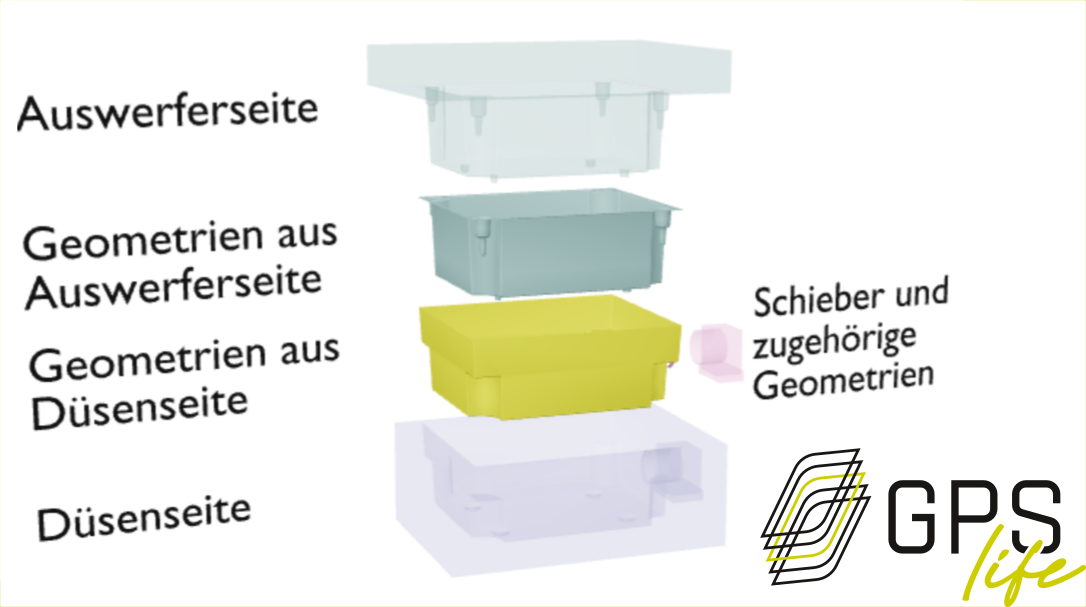
Example image from the plastics course
In terms of content, the course provides a systematic approach to ISO-GPS-compliant tolerancing of plastic moulded parts. Among other things, the relevant contents of ISO 20457, ISO 10579 and ISO 10135, the definition of reference points and the distinction between direct tolerancing and general tolerances are covered. Participants will also learn to differentiate between tool-based and non-tool-based tolerances, determine the appropriate tolerance group in accordance with ISO 20457, understand and calculate Dp dimensions and correctly apply the modifier Ⓕ. This is supplemented by the consideration of plastic-specific acceptance conditions.
The course is aimed at specialists from design, quality assurance and work preparation who want to specify plastic moulded parts in a clear, standard-compliant and practical manner. The aim is to reduce the scope for interpretation and to create a reliable basis for stable manufacturing and testing processes. As an advanced module, the course requires successful completion of the basic course.
We would be happy to give you an insight into the new course! Please use the contact form.
P. S.: Our newsletter will keep you informed about our latest news. It also contains various practical tips and the latest news from standardisation relating to the ISO GPS system!